The Story Behind: The Doxology
This Hymncharts Doxology includes two new verses by Don Chapman, based on Thomas Ken’s original poems.
We long for God to meet us in the dramatic moments of life, yet His deepest work is most often done in the ordinary ones. In 1674, a schoolboy at Winchester College woke before the rest of the house, and before a single word passed to another soul, he sang. Alone in his chamber, with no audience but God, he offered the first fruits of his day to heaven. The Doxology, the most sung four lines in all of Christian worship, was born in those ordinary moments, written by a man who believed every day should begin and end in praise.
Who Wrote the Doxology? The Story of Thomas Ken
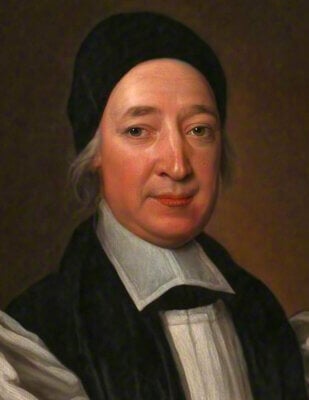
England itself offered little peace in those years. Thomas grew up in the shadow of the English Civil War, watching the church he loved be dismantled around him. In 1651, the same year his father died, Thomas was elected a scholar of Winchester College. The school became a second home to him, and he had no idea how greatly God would one day use him within its walls.
A Hymn Born from Daily Devotion
After his education at Oxford and his ordination as a minister, Thomas returned to Winchester in the 1660s, first as a fellow of the college, then as chaplain to the Bishop of Winchester. There, surrounded by schoolboys, he found his great burden: teaching young souls to walk with God.
In 1674, Thomas published A Manual of Prayers for the Use of the Scholars of Winchester College. He addressed it to a young student he called Philotheus, a name meaning “lover of God,” and in it he laid out a full day of devotion: prayer upon waking, Scripture before study, self-examination at night, reconciliation after quarrels, and thanksgiving for every blessing. Among his instructions was this one:
“Be sure to sing the Morning and Evening Hymn in your Chamber devoutly.”
To serve that instruction, Thomas wrote three hymns: one for morning, one for evening, and one for midnight, should a student find himself awake in the early hours. He anchored the practice in Psalm 92, which declares it a good thing to tell of the Lord’s lovingkindness in the morning and His faithfulness every night. Tradition even paints a picture of Thomas himself rising early to sing his Morning Hymn while accompanying himself on the lute.
So where is the dramatic origin story? Did the Doxology come from a prison cell? A deathbed? A shipwreck? No, it came from a teacher who wanted schoolboys to sing alone in their rooms. Each of the three hymns closed with the same four lines, a final stanza of pure Trinitarian praise:
Praise God, from whom all blessings flow;
Praise Him, all creatures here below;
Praise Him above, ye heavenly host;
Praise Father, Son, and Holy Ghost.
Thomas never gave those lines a title. He simply believed that whether one was rising, resting, or lying awake at midnight, every moment of the day should end in the same place: praise. The church would later call the stanza the Doxology, and it would travel further than anything else he ever wrote.
The Courage of Thomas Ken
The man behind the Doxology lived out the praise he taught, for Thomas feared God far more than he feared kings. As a royal chaplain in 1683, he refused to hand over his house to lodge Nell Gwyn, the mistress of King Charles II, declaring that a clergyman’s residence would not be used for such a purpose. Rather than ruining him, the refusal seems to have won the king’s respect, and in 1685 Thomas was consecrated Bishop of Bath and Wells. Within weeks, he stood at the deathbed of Charles II himself, urging the dying king toward repentance.
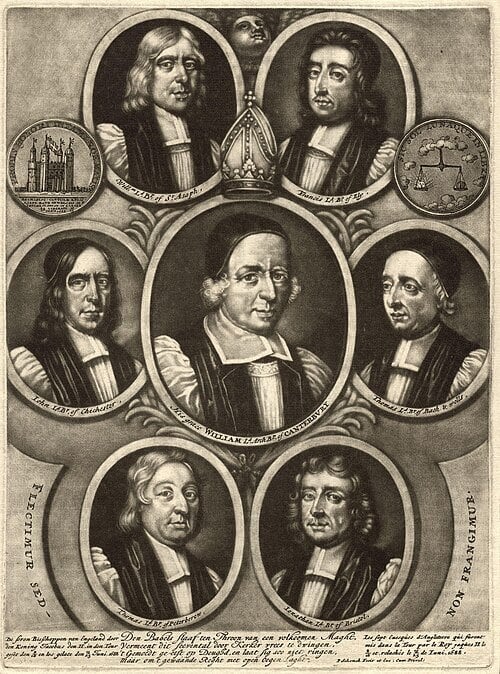
Thomas spent his final years in quiet retirement at Longleat, the estate of his friend Lord Weymouth. He reportedly traveled with his own burial shroud among his possessions, a daily reminder that he was always preparing to meet his God. He died on March 19, 1711, and was buried at sunrise beneath the east window of St. John’s Church in Frome. Tradition holds that his own Morning Hymn was sung as the sun rose over his grave.
How the Doxology Spread Around the World
The hymns Thomas wrote for schoolboys refused to stay at Winchester. So beloved were they that unauthorized copies began circulating, and in 1692 a printer published the Morning and Evening hymns without the author’s permission. Thomas responded by releasing corrected editions of all three hymns in 1694, and he continued polishing them until 1709, giving the Doxology the wording congregations sing today.
The tune came later. The melody we know as OLD HUNDREDTH was already more than a century old, born in Geneva in 1551 for the singing of psalms. The first documented pairing of that stately tune with Thomas’ four lines appeared in Boston in 1790, seventy-nine years after his death. God, it seems, had been preparing the melody long before the words were written, and He joined them together in His own time.
Once joined, the Doxology became the church’s reflex of praise. On March 14, 1744, Charles Wesley was preaching to a packed upper room in Leeds when the floor gave way beneath the crowd, dropping a hundred people into the room below. When Wesley pulled himself from the wreckage and found that not one soul had been killed, he cried out, “Fear not: the Lord is with us; our lives are all safe,” and then, as his own journal records, he began to sing the Doxology. Nearly two centuries later, when trapped miners emerged alive from the collapsed Moose River mine in Nova Scotia in 1936, two hundred miners at the shaft broke into the same four lines. Today the Doxology appears in more than 1,500 hymnals and rises in dozens of languages every Sunday, from offering plates in country churches to cathedrals on the far side of the world.
Return now to that schoolboy in his chamber at Winchester. Thomas Ken wrote volumes of poetry, governed a diocese, confronted two kings, and paid dearly for his conscience. Yet of all he accomplished, God chose to preserve four short lines written so that children could praise Him in private. Perhaps that is the lesson of the Doxology: the praise you offer alone, in the ordinary morning, with no audience but God, may be the most enduring thing you ever do.
“Doxology” Lyrics Video
Learn more about the Hymncharts arrangement of Doxology, and Don Chapman’s two new verses based on Thomas Ken’s original poems.
Download sheet music, chord charts, tracks and multitracks for the Doxology exclusively at Hymncharts.com. You won’t find this arrangement on any other website.
43 Million Streams