The Story Behind: Fairest Lord Jesus
In the year 1673, in the German city of Münster, a student sat copying songs into a small manuscript book. Among them was a poem with no author’s name attached, bearing only a Latin heading: Suspirium ad Jesum, “a sigh to Jesus.” Little did that student know that the sigh he was preserving would one day be sung in cathedrals, college chapels, and country churches on every continent. We often want our hymns to come with dramatic stories: a shipwreck, a deathbed, a battlefield conversion. The most famous story told about this hymn, that medieval crusaders sang it marching to Jerusalem, never happened. The true story is quieter, and it is better, for it is the story of every believer who has looked upon a fading world and longed for a beauty that lasts.
The Anonymous Origins of Schönster Herr Jesu
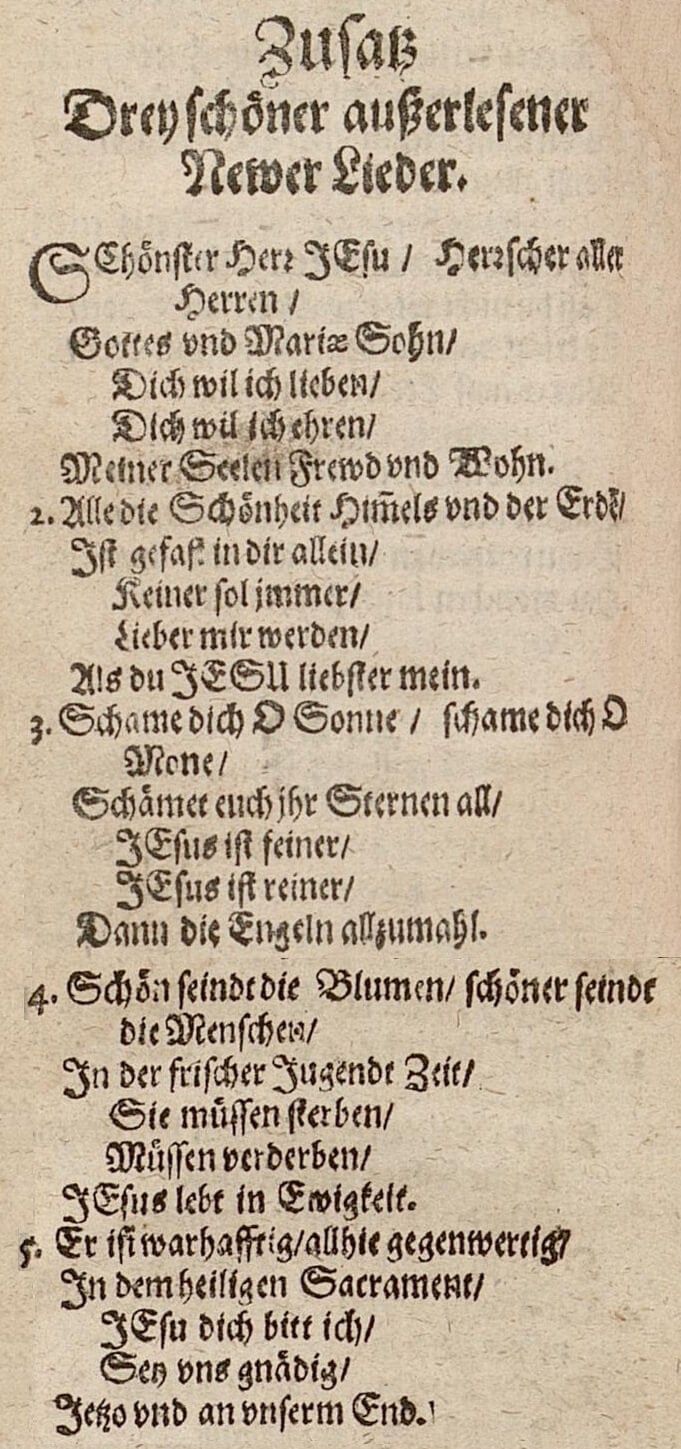
Who wrote it? Was it a famous theologian? A celebrated poet? A medieval knight? No, the author remains entirely unknown. Some have suggested the German Jesuit poet Friedrich Spee, for the hymn breathes the same warm devotional spirit found in his writings, but critical scholars have never been able to prove the attribution. The hymn belongs to no name at all. It belongs, perhaps fittingly, only to the Savior it praises.
The poem itself is a masterwork of devotion. It opens with a personal declaration of love:
Fairest Lord Jesus, ruler of all nature,
O Thou of God and man the Son,
Thee will I cherish, Thee will I honor,
Thou, my soul’s glory, joy, and crown.
From there the anonymous writer surveys everything human beings call beautiful: the moon, the sun, the stars, the angels, flowers in bloom, youth in its prime, silver, pearls, and gold. Each is weighed against Christ, and each is found wanting.
Fading Flowers and Eternal Beauty: The Message of Fairest Lord Jesus
Many hymns were born from a documented tragedy in the writer’s life. This one was not, and that is precisely its power. The crisis inside “Fairest Lord Jesus” is not one man’s crisis; it is the crisis of us all. Flowers bloom and then wither. Young people carry their beauty for a season and then die. Silver and gold shine only for a time. The original German text stated it plainly: the beauty of creation is real, but it is borrowed, brief, and destined to fade, while the beauty of Jesus is original, eternal, and untouched by decay. The unknown writer answered the universal sentence of death by attaching the soul to the one beauty death cannot destroy. The original hymn concluded with a prayer that this eternally beautiful Christ would grant grace in life and at the hour of death. It was a private prayer, a meditation, and a preparation for eternity, all in a few short stanzas.
The Silesian Folk Melody of 1842
For its first century and a half, the hymn was sung to an older Baroque melody printed in Münster in 1677. The tune the world knows today came much later. In 1842, the collectors August Heinrich Hoffmann von Fallersleben and Ernst Richter published Schlesische Volkslieder mit Melodien, a collection of folk songs from the Silesian region, and there the familiar melody appeared for the first time, gathered from the County of Glatz. The text printed with it had been revised as well. The stark stanza about death and withering flowers was gone, and in its place bloomed the springtime imagery English congregations now know by heart:
Fair are the meadows, fairer still the woodlands,
Robed in the blooming garb of spring;
Jesus is fairer, Jesus is purer,
Who makes the woeful heart to sing.
What began as a Catholic devotional poem in seventeenth-century Münster was becoming a hymn the whole church could sing.
The Crusader’s Hymn Legend: A Story That Never Happened
Soon after, a legend attached itself to the tune. When Richard Storrs Willis published the melody in America in 1850, he included a note claiming the hymn “was wont to be sung by the German knights on their way to Jerusalem.” The Romantic era loved such tales, and this one spread through British and American hymnbooks under the title “Crusader’s Hymn.” When Franz Liszt used the melody as a crusaders’ march in his 1868 oratorio on Saint Elizabeth, the legend gained a soundtrack, and the tune acquired its second name, ST. ELIZABETH. So thoroughly did the story take hold that some hymnals confidently dated the words and music to the twelfth century. Yet the documents tell another story. The text cannot be traced earlier than 1673, and the melody cannot be traced earlier than 1842. No crusader chronicle, no pilgrim songbook, and no medieval manuscript contains this hymn. The hymnologist James Mearns examined the claim and rejected it. Of course, the hymn never needed the legend, for its true glory was never in a march to Jerusalem but in the Savior it exalts.
Fairest Lord Jesus and Beautiful Savior: The English Translations
Dejlig er jorden: A Hymn of Peace Born in Wartime
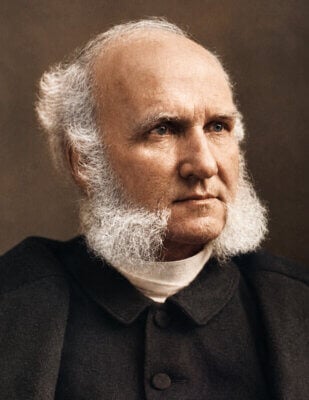
One chapter of this story does carry the weight of history. In 1850, during the First Schleswig War, the Danish poet Bernhard Severin Ingemann watched singing soldiers march through the town of Sorø on their way toward the Battle of Idstedt. Troubled by the bloodshed, he wrote to his wife, “God grant that the great hostility be softened and a just peace be won.” When a pastor friend brought him the Silesian melody and asked for Danish words, Ingemann poured that longing into an essentially new hymn, “Dejlig er jorden,” a pilgrim song that ends with the angels’ Christmas proclamation of peace on earth. Translated into Swedish in 1884 as “Härlig är jorden,” it became one of Scandinavia’s most cherished hymns, sung at Christmas and, remarkably, at more Swedish funerals than nearly any other hymn. The melody born beside a poem about eternal beauty became, in the North, a song of hope carried all the way to the grave.
Beautiful Savior Around the World
In America, the hymn found its most famous home at St. Olaf College, where F. Melius Christiansen’s choral arrangement of “Beautiful Savior” became the signature piece of the St. Olaf Choir and the traditional conclusion of its Christmas Festival since 1924. In 2005 the choir sang it at the White House, and in 2018 the U.S. Army Band played “Fairest Lord Jesus” as the body of President George H. W. Bush arrived at the Capitol to lie in state. Today the hymn appears in hundreds of hymnals across Lutheran, Catholic, Baptist, Methodist, Presbyterian, and Anglican traditions, one of the most ecumenical hymns the church possesses.
Indeed, there is something beautiful in the fact that we will never know who wrote it. The hymn’s own argument is that every earthly glory fades: flowers, youth, silver, gold, even the names of poets. The author’s name has vanished, the crusader legend has crumbled, yet the hymn endures, for its subject endures. When you sing it this Sunday, you are joining an unnamed believer from three and a half centuries ago in the same eternal confession:
Beautiful Savior! Lord of the nations!
Son of God and Son of Man!
Glory and honor, praise, adoration,
Now and forevermore be Thine!
“Fairest Lord Jesus” Lyrics Video
Download sheet music, chord charts, tracks and multitracks for Fairest Lord Jesus exclusively at Hymncharts.com. You won’t find this arrangement on any other website.

43 Million Streams