The Story Behind: I Will Sing of My Redeemer
Original Melody: 1915 Early Edison Recording
New Melody: Don Chapman’s Hymns Reborn Version 2026
The fire took the train, but it did not take the song.
In December of 1876, Philip P. Bliss and his wife Lucy were killed in the Ashtabula rail disaster while traveling to Chicago. It was one of hymn history’s darkest moments. Yet from the wreckage, the Lord preserved a trunk, and inside that trunk were papers Bliss had left behind. Among them was the text of an unpublished hymn, a hymn that began with the words, “I will sing of my Redeemer.”
The surest story behind this hymn is not a neatly documented scene where Bliss sat down and told the world exactly why he wrote it. No diary entry has surfaced to give us that kind of certainty. Instead, the clearest story is the one that came after the words were written, when grief, Christian hope, and the Lord’s preserving hand all met at once. That is what makes this hymn so moving. It was born as a song of praise, then introduced to the church through sorrow.
Philip Bliss Biography and Gospel Hymn Calling
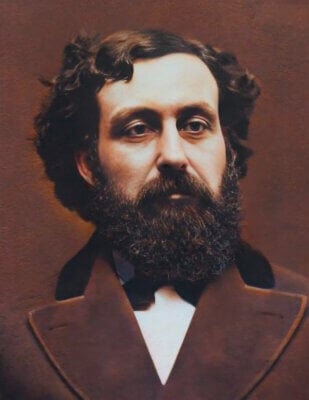
By late 1876, Philip Bliss was already one of the best-known gospel workers in America. He moved in the revival-song world of Major D. W. Whittle, Ira Sankey, George C. Stebbins, and the wider Moody circle. He was no obscure writer laboring in silence. He was a singing evangelist, a gifted composer, and a man whose life was aimed straight at the gospel. Though he was only thirty-eight years old, he was already at the height of his ministry.
Bliss had a rare gift for writing songs that ordinary believers could sing with full hearts. He gave the church “Hallelujah, What a Saviour!” and wrote the tune for “It Is Well with My Soul.” Again and again, his work pointed people toward Christ with plain, memorable language. That same directness shines in “I Will Sing of My Redeemer.” It does not hide behind ornate poetry. It speaks like a believer who has been forgiven and cannot keep quiet about it!
The Origins of “I Will Sing of My Redeemer”
Was this hymn written after some personal crisis Bliss described in a letter? From the evidence before us, it is wiser not to say so. The text is dated to 1876, but no primary source we found ties it to one dramatic incident in Bliss’s life. That matters, because hymn stories often gather legends over the years, and it is better to speak carefully than to make the story larger than the truth allows.
What we do know is enough to stir the heart. The lyric is full of joy from beginning to end. Bliss wrote, “I will sing,” “I will tell,” and “I will praise.” This is not the language of defeat. It is the language of Christian witness. The refrain says it plainly:
Sing, O sing of my Redeemer!
With His blood He purchased me;
On the cross He sealed my pardon,
Paid the debt, and made me free.
Those are not hesitant words. They are words meant for open mouths and gathered voices. Early publication even placed the hymn beneath the Scriptural heading, “Rejoice, ye Gentiles, with his people,” from Romans 15:10. It was a song of redeemed people rejoicing in what Christ had done.
The Ashtabula Disaster and the Death of Philip and Lucy Bliss
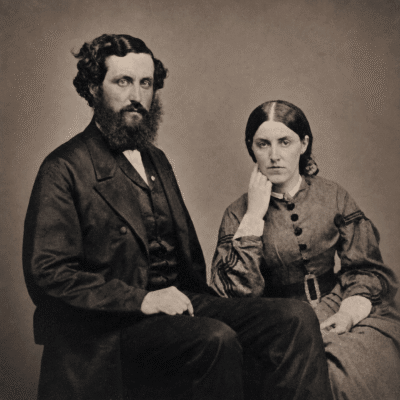
Then came the journey to Chicago.
Philip and Lucy were traveling there to assist in Major Whittle’s meetings. As their train crossed the bridge at Ashtabula, Ohio, the bridge collapsed. The cars plunged into an icy ravine and caught fire. The disaster claimed many lives, and among them were the Bliss couple. The church lost a beloved hymnwriter. Friends lost companions in ministry. A wife and husband who had served together were gone in a single awful night.
(Restored image, reportedly the Bliss 1859 wedding photo.)
Some later tellings add a dramatic detail, saying Bliss escaped the wreckage but would not leave without Lucy and so returned to the flames. It is a powerful image, and one can understand why it has been repeated so often. Yet even early memorial remarks treated that detail cautiously. So it is best not to present it as settled fact. The sorrow is deep enough without embellishment. What is certain is this: both Philip and Lucy died there, and the church mourned them deeply.
The Recovered Manuscript and James McGranahan’s Melody
But the Lord was not finished with Philip Bliss’s words.
Among the papers recovered from his surviving belongings was the text of “My Redeemer,” the early title of the hymn we now know as “I Will Sing of My Redeemer.” James McGranahan, moved by the discovery and by the loss of his friend, prayed that he might be able to join the lyric to music. In time, he wrote the tune that became the standard setting, the tune most churches still recognize today.
Bliss had written the words, but he never lived to give them a melody. McGranahan did that after Bliss’s death, and in doing so he helped turn a recovered manuscript into a congregational song. Major Whittle later spoke of the finished hymn as Bliss’s final witness to what Christ meant to him. That is a moving way to hear it, and the words themselves support it. Bliss wrote of pardon, ransom, victory over “sin, and death, and hell,” and of the Savior who “from death to life hath brought me.” In the shadow of Ashtabula, those lines took on even greater weight.
The first public singing only deepened that feeling. Introduced in Chicago with the story of the recovered manuscript, and sung by four men’s voices, the hymn met a deeply sympathetic hearing. It did not sound like mere performance. It sounded like grief turning into praise.
How the Hymn Spread Through Churches Worldwide
From there, the hymn began to travel.
Its earliest secure publication came in Welcome Tidings in 1877, where text and tune appeared together under the title “My Redeemer.” Soon after, it was republished in Gospel Hymns No. 3 in 1878, and from there it moved into the bloodstream of evangelical worship. The church did what the church has always done with songs that speak clearly of Christ. It sang them, passed them along, and carried them from congregation to congregation.
One reason the hymn spread so widely is that it gives believers plain words for great truths. It sings of the cross, the ransom Christ gave, the pardon He sealed, and the freedom He won. There is nothing cloudy about it. It tells the gospel in a way a congregation can remember after the service is over.
Over time, the hymn crossed denominational lines and language boundaries. It found a home not only in gospel-song collections, but in Baptist hymnals, Reformed hymnals, Salvation Army books, Adventist worship, Covenant worship, and beyond. Some churches kept McGranahan’s original refrain-driven setting. Others later paired the text with the Welsh tune HYFRYDOL, giving it a more stately frame. Either way, the words endured. Today the hymn has appeared in hundreds of hymnals and in languages including German, Spanish, Hawaiian, Polish, Swahili, and Arabic. That is no small thing. What began as a quiet lyric preserved through sorrow became a song of redemption for the worldwide church.
Later recollections even tied the hymn to the earliest days of phonograph recording, a fitting detail for a song that has kept finding new voices. Whether sung in a revival meeting, a choir loft, a country church, or a modern congregation halfway around the world, the refrain still carries the same force: “Sing, O sing of my Redeemer.”
Don Chapman and “Sing of My Redeemer”
That story did not stop in the nineteenth century.
After researching Bliss and this hymn, arranger/composer Don Chapman was so moved by the story that he wrote a new melody for Bliss’s classic public-domain text. He titled it “Sing of My Redeemer,” and placed it within his Hymns Reborn series. What stirred Chapman was not only the historical drama, but the way the hymn speaks into worship now, especially in the weeks after Easter, when churches still need resurrection songs even after the holiday itself has passed. As Chapman put it, “The big day is over, but the message isn’t.”
That burden shaped the new setting. Chapman did not want a song that only fit Easter morning. He wanted one that could carry a congregation into ordinary Sundays, into spring and summer, into all the weeks when believers still need to remember the cross and the empty tomb. His arrangement was built to be congregationally driven, less like performance and more like proclamation. It leaves room for people to sing, to breathe, and to mean the words. That choice feels right for a hymn like this. “I Will Sing of My Redeemer” has always belonged to the gathered church.
There is something beautiful in that continuity. Bliss wrote the words. McGranahan gave them their first lasting tune. Generations of Christians carried them through churches around the world. And now Chapman, stirred by the same old gospel truth, has given the text a fresh musical home for the church of today. The message has not aged. Christ still purchased His people with His blood. He still sealed their pardon. He still brings sinners from death to life. Sing it in your church: download free sheet music and a chord chart.
Philip Bliss’s Enduring Impact on the Church
The world remembers the wreck at Ashtabula, and rightly so. It was a terrible loss. But the church remembers something else as well. It remembers that out of the ashes came a song of praise.
Philip Bliss never lived to hear James McGranahan’s melody. He never stood in a packed tabernacle and listened as grieving Christians sang his words back to heaven. He never saw the hymn printed in book after book, or translated into language after language. Yet the Lord allowed him to write a text so full of gospel light that it outlived the tragedy that introduced it. That is why congregations still love it. It is both tender and triumphant. It looks to the cross without flinching, and it answers sorrow with praise.
Perhaps that is the real wonder of “I Will Sing of My Redeemer.” It is not simply that the words survived. It is that they still do their work. They still teach the church how to speak when grace has overwhelmed the heart. They still give believers a way to say, with joy and with conviction, that Christ has paid the debt and made them free.
And so the hymn goes on.
From Philip Bliss, to James McGranahan, to the congregations of the nineteenth century, to churches across the world, and even to Don Chapman’s fresh melody for a new generation, the same cry continues to rise: “Sing, O sing of my Redeemer.” When the Sundays after Easter feel ordinary, when grief presses hard, when believers need words sturdy enough for both memory and hope, this hymn is still there. Still singing. Still pointing to Jesus. Still declaring, “He from death to life hath brought me.”
That is why the church keeps returning to it. And by the Lord’s kindness, it will keep singing it yet.
Historical Postscript 1: What Happened to the Bliss Children?
One tender question often rises after the story of Philip and Lucy Bliss is told: what happened to their children?
Philip and Lucy did not lose their sons in the Ashtabula disaster. Early reports were confused, and some accounts first suggested that the children had perished with their parents. But the boys were safe. Philip and Lucy had taken their two young sons east for Christmas, then left them with relatives before boarding the train that carried them toward Chicago.
Their names were Philip Paul Bliss Jr., often called Paul, and George Goodwin Bliss. Paul was the older son, born in 1872. George was the younger, born in 1874. When their parents died in December of 1876, they were still very small boys.
And yet, even in the shadow of such sorrow, the Lord surrounded them with care.
The 1877 Memoirs of Philip P. Bliss records that Sabbath-school children had sent about $9,500 in penny contributions after the tragedy. It was a remarkable offering. These were not wealthy donors trying to make a public display. They were children giving what they could, penny by penny, until their small gifts became a large mercy. The money was placed with trustees for a monument and for the boys’ “education and maintenance.”
Other provisions were also arranged. Bliss’s estate, insurance, copyright interests, and any possible railroad recovery were to be administered for the benefit of the minor children. It is a quiet but beautiful detail in the story. The man who had given the church so many songs did not leave his children forgotten. The Christian community gathered around them.
A later obituary for George Goodwin Bliss says the brothers were cared for for several years by their uncle O. W. Young at Rome, Pennsylvania. Later, they lived in the household of Rev. J. S. Ellsworth at Newark Valley. An 1880 census transcript also places Paul and George in the Ellsworth home. Their childhood had been marked by terrible loss, but it was also marked by the kindness of relatives, ministers, trustees, and believers who felt the burden of their need.
Both boys grew into adulthood and made their own way in the world.
Philip Paul Bliss Jr. followed, in some measure, the musical path of his father. He became a composer, organist, music teacher, and music editor. He studied at Princeton, continued musical training in Philadelphia and Paris, and later worked for important music publishers, including John Church Co., Willis Music Co., and Theodore Presser Co.
George Goodwin Bliss took a different path. He became an accountant and auditor, worked for firms including Sears, Roebuck & Co., and later practiced as a public accountant in Detroit. He was also remembered as a church elder, which gives a quiet glimpse of faith carried into adult life.
There may also have been an earlier child in the Bliss family who died before 1876. The near-contemporary memoir refers to the loss of a first child, though no reliable name or details have been found. For that reason, the cleanest historical answer is that Philip and Lucy Bliss left behind two named surviving children, Paul and George, and perhaps had one earlier child who had already gone to heaven.
The story of the Bliss children does not erase the sorrow of Ashtabula. Nothing could. But it does show another grace-filled thread in the story. The same church that sang Philip Bliss’s hymns also helped care for his sons. The same gospel that filled his music moved ordinary believers, even children, to compassion.
Historical Postscript 2: What Happened to the Original Text?
I (Don Chapman) was curious as to the whereabouts of that famous piece of paper with the “I Will Sing of My Redeemer” lyrics. Were they in a museum? Perhaps a private collection? Wouldn’t it be amazing to see it!
I reached out to the Philip P. Bliss Gospel Songwriters Museum and they were kind enough to respond!
Dear Mr. Chapman,
Thank you for your e-mail. I checked with the museum director, also a board member who has done significant research for the museum. The museum does not have the original manuscript for “I Will Sing of My Redeemer.”
You may want to contact Moody Bible Institute Archives.
I doubt it is there. Moody Bible Institute Archives has Mr. Bliss’s reed organ.
Sincerely,
David Lenington
P. P. Bliss Gospel Songwriters Museum
I figured that piece of paper has been lost to history. Maybe it will turn up one day in somebody’s great-great-uncle’s attic in a box!
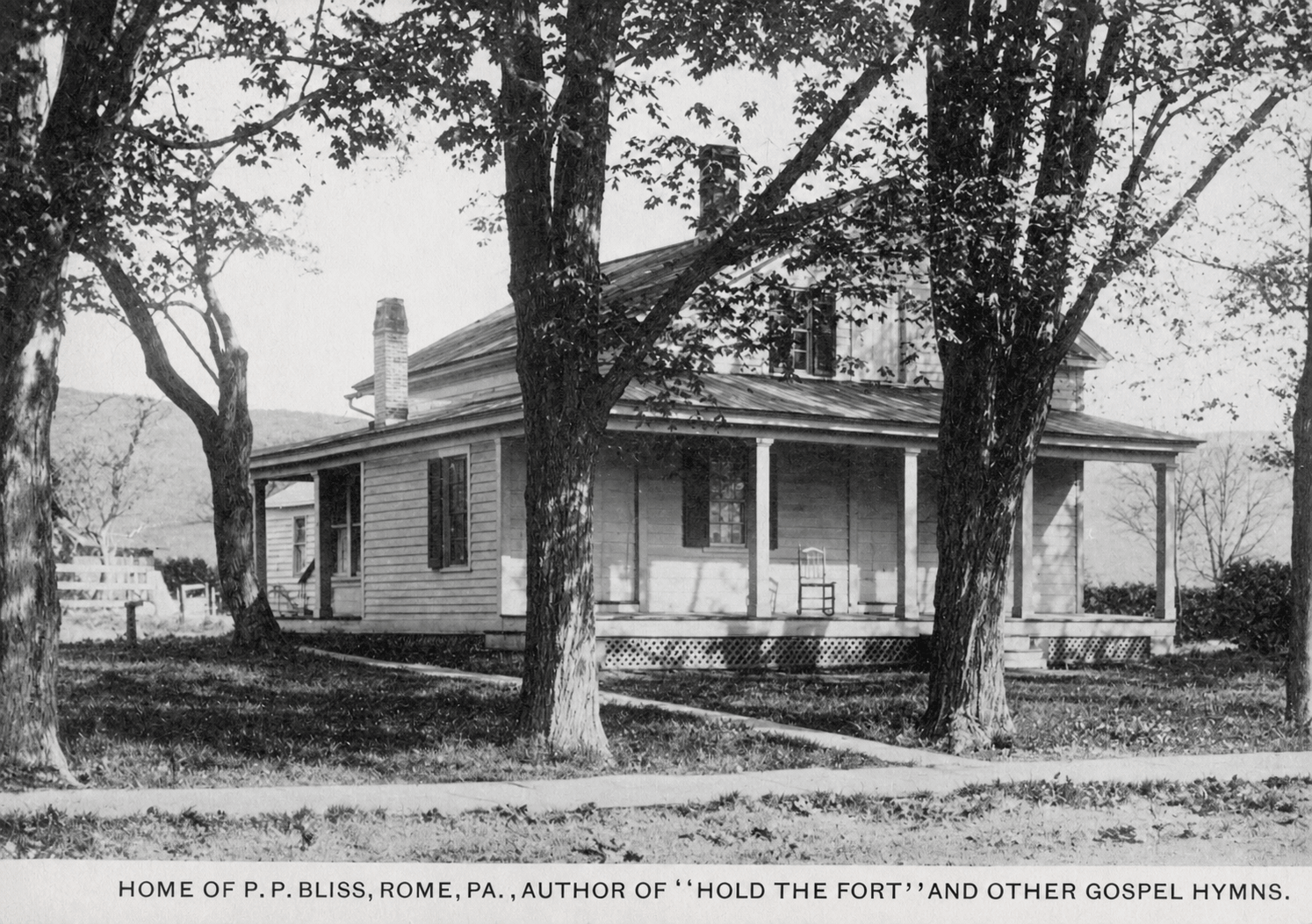
Postcard picture of the home of Philip and Lucy Young Bliss in Rome, PA from around 1907. The building is now the Philip P. Bliss Gospel Songwriters Museum. Picture taken and restored from their Facebook page.
“Sing of My Redeemer” Lyrics Video
Moved by the story and legacy of Philip Bliss, Don Chapman created this tribute melody as a fresh way for today’s church to sing, “I Will Sing of My Redeemer.”
Download a free lead sheet / piano, chord chart and MP3 vocal demo. Additional charts: transposed sheet music, chord charts, tracks and multitracks for Sing of My Redeemer exclusively at Hymncharts.com and Worshiphymns.com. You won’t find this arrangement on any other websites.

43 Million Streams